




Latest News
- British Columbia Premier David Abe: 'We're not looking for a 2026 election' after a challenging year for the NDP coalition
- Power restored to thousands of customers in Atlantic region after strong winds over the weekend
- Toronto police alert; asking for help identifying suspected child molester
- What you need to know about the oil tanker ban in British Columbia
- Hundreds of homes in northern Ontario mining town left without heat after gas outage
Latest Ads
-
Jasmine Jewel
Call

-
Omidan group
Call

-
Amir Madanpour
Call

-
Dimo studio
Call

-
Yorkacademy
Call

-
Maryambagheri
Call

-
Shishlix Restaurant
Call


 362 View
 184 View
 175 View
 774 View
 199 View
 431 View
 1828 View
 156 View
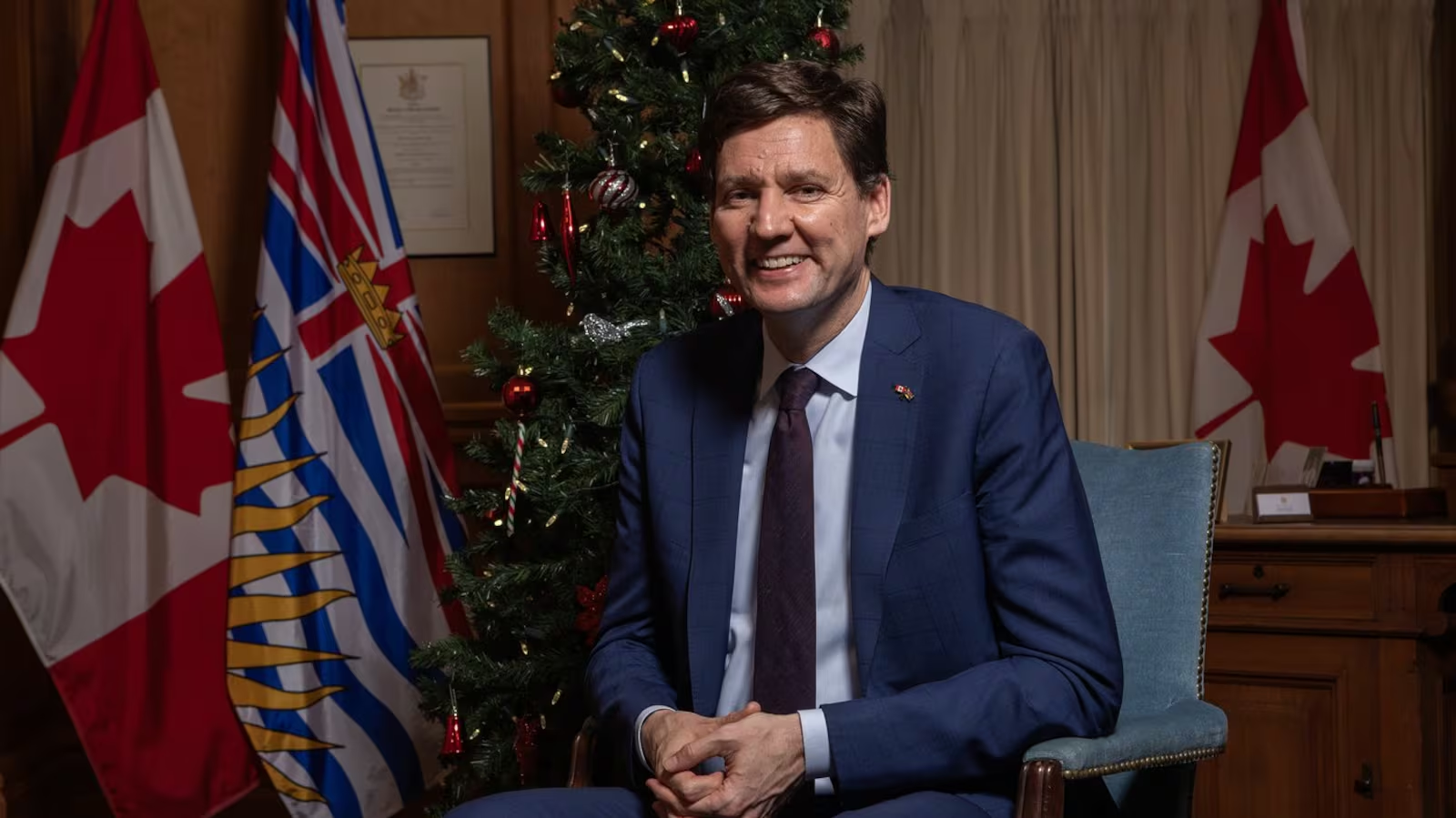
British Columbia Premier David Abe: 'We're not looking for a 2026 election' after a challenging year for the NDP coalition
On December 3, the day after the Krafton, British Columbia, pulp mill was announced to be closing, with the loss of 350 jobs, the political focus shifted not to the economic crisis but to a leadership crisis in the British Columbia Conservative Party, where 20 party members called on then-leader John Rusted to resign.
The event was symbolic of a year of turmoil within the Conservative ranks, a situation that Abe acknowledged had ended politically in the NDP government’s favor.
However, he dismissed the notion that his government had a “special opportunity” in 2025 after winning a slim one-seat majority in the October 2024 election.
“If this was a special opportunity, then I don’t think I’ll ever ask to go to the bathroom at school again,” Abe said in his year-end address.
“We’ve had some very challenging and turbulent sessions, and the work we have to do as British Columbians at this critical juncture is enormous,” he added.
A difficult year for Abe’s government
The past year has been a difficult one for Abe, with the NDP government’s relations with Indigenous peoples, labour unions and environmentalists facing serious strains.
Meanwhile, John Rusted saw his party’s number of members in the legislature drop from 44 to 39, amid attrition, allegations of blackmail and even the tapping of MPs’ phones during internal meetings to identify sources of leaks.
Rusted eventually resigned, and Trevor Halford was named interim leader, while the race for the permanent leadership has begun.
Abe said:
“Many people think this Conservative mess is in our favor. “In one sense, it certainly is politically correct, but ultimately, some of the behavior we’ve seen from the Conservatives is destructive to the work we need to do in this province.”
Is an early election coming?
The instability in the opposition has raised questions about whether Abe will take advantage of the situation and call an early election.
He said the province could be headed for an election if the opposition succeeds in blocking legislation. He pointed to the recent vote on the North Shore power transmission line, which the government had called a vote of confidence and passed by just one vote, with the help of Speaker Raj Chauhan.
Asked about the possibility of a snap election in 2026, Abe said:
“We’re not looking for an election. Of course, if necessary, we’re prepared; we’re funded, we’re debt-free, we’re ready to go if necessary. But the people of British Columbia don’t want an election.”
Political and economic pressures
The past year’s major issues, including the US trade war, a massive public service workers’ strike and court rulings on Indigenous rights, have severely tested the cohesion of the ruling party’s coalition.
Two bills to accelerate natural resource projects faced fierce opposition from Indigenous peoples and environmentalists, and both passed only with the vote of the speaker.
Indigenous peoples also criticized Abe’s comments about the possibility of amending the Indigenous Peoples’ Bill of Rights Act after a court ruling accused the government of not consulting adequately.
“We have disagreements at times, there’s no doubt about that,” Abe said. “But the path is clear; we’re working with Indigenous peoples across the province.”
The province’s finances
When Abe succeeded John Horgan in November 2022, forecasts were for a surplus of nearly $6 billion.
But three years later, forecasts point to a deficit of $11.2 billion.
Abe said the decline in natural resource prices has created a new reality:
“In a province that is dependent on resources, we see these booms and busts. The choice is either we support people or we cut costs,” he stressed.
“People are really struggling right now. Our focus remains on supporting the people of British Columbia.”
The government has cut 1,100 public sector jobs, he said, but the province still needs more schools and hospitals.
“The reality is that we can’t get out of this situation by cutting costs,” he added.
Support within the party
Abe acknowledged that not all members of the party agree with the government’s path, but he pointed to the 83 per cent vote of confidence from party members at last month’s meeting.
“I’m grateful that we came out of our convention united, the overwhelming majority of members trust me and know how to move this delicate and complex task forward,” he said.
And he added:
“They understand the complexities of this moment and our goal is simply to protect the interests of the people of British Columbia.”
News source
Suggested Content
Latest Blog




Login first to rate.
Express your opinion
Login first to submit a comment.
No comments yet.