





Latest News
- Victim's family outraged; Ryden Bragden's killer will not go to prison
- Increase in advanced prostate cancer; alarm bell for reconsideration of men's screening
- John Rusted removed from leadership of British Columbia's Conservative Party, but says she has no intention of leaving(مؤنث)
- New tax credit: Saving the oil industry or betraying the environment?
- At the height of "America First" policy, ICE went after Canadian manufacturer
Latest Ads
-
Jasmine Jewel
Call

-
Omidan group
Call

-
Amir Madanpour
Call

-
Dimo studio
Call

-
Yorkacademy
Call

-
Maryambagheri
Call

-
Shishlix Restaurant
Call


 223 View
 546 View
 312 View
 232 View
 481 View
 539 View
 468 View
 171 View

New tax credit: Saving the oil industry or betraying the environment?
Why is the tax credit in the Ottawa-Alberta energy deal being called both a “game-maker” and a “betrayal”?
Enhanced oil recovery tax credit is a “direct subsidy” to oil companies — Green Party leader
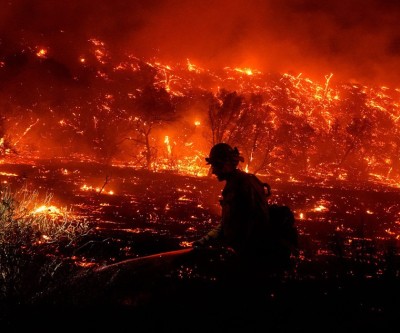
While 2025 was not a great year for Canadian oil and gas drillers, the atmosphere at Monday’s gathering at the Hyatt Regency Calgary hotel was a little hopeful. That’s partly because of a new energy deal between Alberta and the federal government that many in the oil industry see as a “game-maker.”
One of the most important parts of the deal is the inclusion of enhanced oil recovery (EOR) technology on the list of projects that can benefit from federal tax credits.
What is EOR?
Enhanced oil recovery is a technology that captures carbon dioxide produced by industries and injects it into underground reservoirs to extract more oil from wells. The CO₂ is trapped deep in the Earth.
Industry activists say the technology will both boost production and help Canada catch up with the United States, which has long offered tax credits for the technology.
But environmentalists disagree. They say the tax credit is a “non-renewable fossil fuel subsidy” that leads to increased oil production and increased greenhouse gas emissions.
Why is the new deal controversial?
The federal government previously excluded EOR from its carbon capture tax credit proposal, a move that was supported by environmentalists and criticized by the oil industry.
But in a memorandum of understanding signed last week between Alberta and Ottawa, the government agreed to provide tax credits and policy support for large-scale carbon capture and storage projects — including EOR — to “provide the necessary confidence to attract domestic and foreign investment.”
The shift in stance was a major victory for the oil industry. Alberta Premier Daniel Smith said EOR could revive “40 old oil fields.”
But not everyone is happy…
Green Party leader Elizabeth May said she was “shocked” to see EOR in the deal, calling it a “great betrayal.” She noted that the federal government had pledged just days earlier not to include EOR in tax credits.
“This is a direct subsidy to produce more oil, to companies that are already making astronomical profits. We should not be subsidizing fossil fuel production,” she said.
Former environment minister Steven Guilbeau cited the government’s shift in stance as one of the reasons he resigned from cabinet.
Even some Liberal MPs said the decision went against Canada’s commitment to eliminate inefficient fossil fuel subsidies.
Is EOR really a climate solution?
Environmentalists like the Pembina Institute say:
EOR can reduce the carbon emissions of a barrel of oil;
but it ultimately leads to more oil production;
and that means more greenhouse gas emissions overall.
In their view, the policy may be economically beneficial, but it is not “climate-friendly.”
What is the government saying?
“It’s a good idea to put carbon underground on a permanent basis,” said the federal energy minister.
Alberta saw it as important, and we agreed.”
The energy agreement also paves the way for a new heavy bitumen pipeline from Alberta to British Columbia; but a key condition is that the massive Pathways Plus carbon capture and storage project at Cold Lake goes ahead.
Source
Suggested Content
Latest Blog




Login first to rate.
Express your opinion
Login first to submit a comment.
No comments yet.