





Latest News
- Canada Life denies amputation coverage to RCMP officer injured in line of duty; activists say he's not alone
- Ontario's provincial plan for 2025 is fully completed.
- Rare adoption of a polar bear cub near Churchill confirmed by scientists
- Alberta closes supervised drug use centre at Edmonton hospital
- These maps show how the pre-Christmas storm is sweeping across Canada
Latest Ads
-
Jasmine Jewel
Call

-
Omidan group
Call

-
Amir Madanpour
Call

-
Dimo studio
Call

-
Yorkacademy
Call

-
Maryambagheri
Call

-
Shishlix Restaurant
Call


 199 View
 221 View
 346 View
 673 View
 258 View
 1192 View
 248 View
 171 View
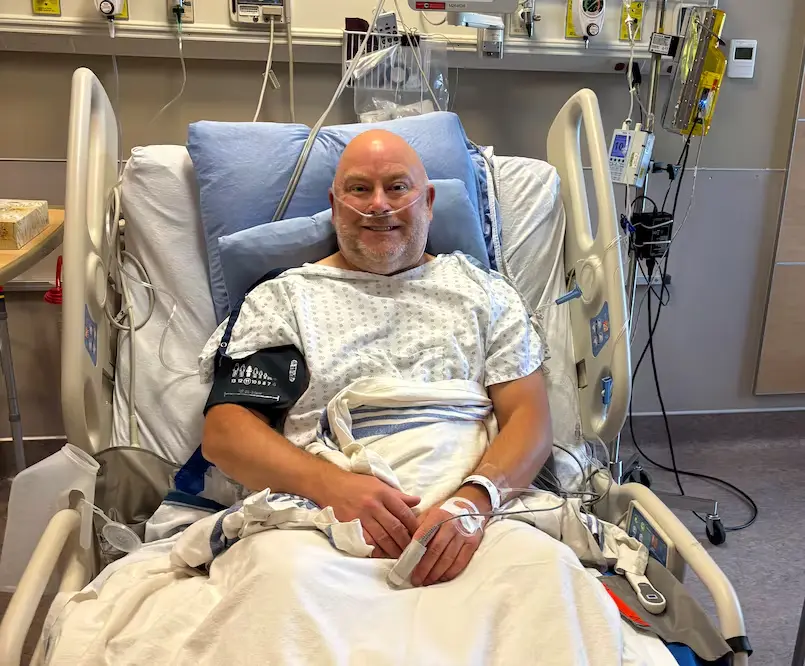
Canada Life denies amputation coverage to RCMP officer injured in line of duty; activists say he's not alone
The company reversed its decision to deny $55,000 in insurance coverage after CBC News followed up.
Jason Haidamaka, a retired RCMP officer, sat in his car and cried with emotion when he learned that his leg would be paid.
Haidamaka had lived with pain for years after an accident he suffered in the line of duty. Last summer, the lower part of his right leg was amputated. However, Canada Life twice denied the $55,000 in “accidental disability” insurance, saying that to qualify, the amputation had to have occurred within two years of the accident.
Haidamaka’s amputation came five years after the initial accident; after several failed surgeries and many sleepless nights due to chronic pain.
A few days after CBC News contacted Canada Life about the case’s denial, Haidamaka received a call from the company saying two checks—one for $50,000 and the other for $5,000—were on the way.
In a statement, Canada Life said, “Due to privacy concerns, we are unable to comment on specifics, but coverage decisions must be made in accordance with RCMP guidelines.”
The company explained that it understands the difficulty of recovering from such incidents and has worked with the RCMP to find a solution. However, it did not provide an answer as to why it changed its decision.
A fateful night
Haidamaka was injured in November 2019 in his hometown of Elkford, British Columbia, during a routine traffic stop that changed his life forever. He was chasing a man accused of selling drugs, knocking him to the ground and falling hard on packed ice and snow.
Shortly after, an egg-sized lump formed on the lower part of his right leg, the beginning of a five-and-a-half-year, painful medical journey that ultimately led to amputation.
Haidamaka, now 54, was initially denied amputation benefits from Canada Life. In a letter reviewed by CBC News, the company said the amputation was ineligible because it occurred more than two years after the injury.
He appealed the decision but was again denied. “Despite the medical team’s efforts to save the leg, the amputation was performed after the contractual 730-day deadline,” the appeal said.
Haidamaka’s leg was amputated in July 2025—more than five years after the accident. “This was not a case of delay in filing,” he said. “I was constantly trying to get better, and it seems like trying to get better shouldn’t be penalized,” he added.
The case is so unique that it shouldn’t be subject to the two-year statute of limitations that isn’t in place for such situations.
Repeatedly denied amputation cases
Activists say Haidamaka is not alone. Many amputation cases are denied because the timing of the amputation decision doesn’t align with insurance deadlines, they say.
“The decision to amputation is unthinkable and should never be made hastily because of insurance limitations,” said Amy Brennan of the charity War Amps.
The onset of the COVID-19 pandemic delayed Haidamaka’s diagnosis and treatment, adding to the strain on Canada’s healthcare system, she added.
After several medical visits, he was diagnosed with a fascial tear, a condition in which a muscle bulges out and rubs against two nerves. Before the accident, Haidamaka enjoyed camping and hiking with his wife and three teenage sons, but after that, even simple tasks or a good night’s sleep became impossible.
The first surgery in 2022 worsened the condition; a second surgery in January 2023 also failed to stop the chronic pain. Finally, in January 2025, he and his medical team decided to amputate his leg.
In July 2025, his right leg was amputated below the knee at a Calgary hospital, and for the first time since the accident, his pain stopped. “It literally saved my life,” he said.
Need for more education about amputations
The accident led to early retirement for Haidamaka and years of financial “nightmare.” Brennan said War Amps has seen similar cases, and one of the main reasons for denials is “a lack of awareness” among insurance companies, since amputations affect such a small population.
Should you accept an insurance denial? No
Sivan Tumarkin, an insurance litigation lawyer, said companies typically have no incentive to change their minds at the appeal stage, but decisions are not final. “There’s a lot of gray area and there’s room for negotiation.”
Haidamaka said he’s grateful for those who supported him along the way: “That was more valuable to me than money; someone standing up and saying, ‘Let’s do the right thing.’”
He plans to use some of the insurance money to take his children on a road trip and buy a roof tent for his pickup truck: “It’s a dream come true without financial worries.”
Source
Suggested Content
Latest Blog






Login first to rate.
Express your opinion
Login first to submit a comment.
No comments yet.