





Latest News
- At the height of "America First" policy, ICE went after Canadian manufacturer
- Snowy winter brings new hope for Canadian ski resorts
- Murder charges rise among Canadian teens despite overall murder rate decline
- Algoma Steel CEO: Federal government knew about layoffs before providing $400 million loan
- Online banking scam leaves Winnipeg woman with $174,000 in debt
Latest Ads
-
Jasmine Jewel
Call

-
Omidan group
Call

-
Amir Madanpour
Call

-
Dimo studio
Call

-
Yorkacademy
Call

-
Maryambagheri
Call

-
Shishlix Restaurant
Call


 164 View
 616 View
 220 View
 298 View
 568 View
 207 View
 391 View
 279 View
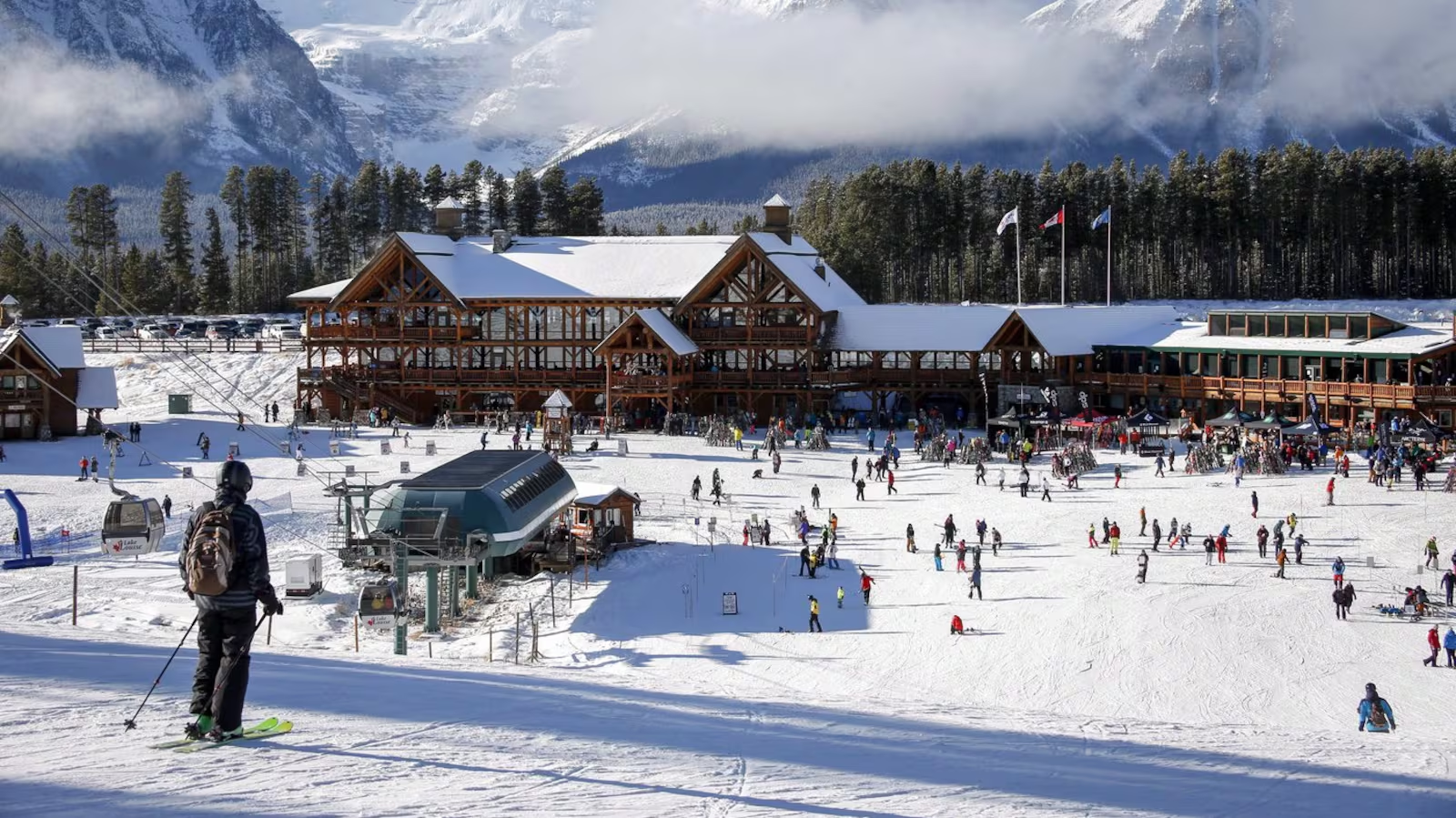
Snowy winter brings new hope for Canadian ski resorts
Promising winter forecast gives new life to ski resorts, even as younger generations lose interest
With snowfall and cold weather increasing, Canada’s winter outlook is brighter than ever, and many ski resorts are seeing a very snowy season ahead—even though younger generations are taking to the sport less than in the past.
“From the bottom of the mountain to the top, it’s a winter wonderland,” said Kendra Skerfield, vice president of Banff Sunshine Village in Alberta, describing the conditions. She even said she saw several 20-year-olds walking down the street to the bus stop with skis on their way to work.
The resort experienced one of its earliest reopenings in more than 40 years this year, opening on Nov. 2, thanks to unprecedented snowfall. Whistler Blackcomb in British Columbia, Lake Louise in Alberta, and Mont Tremblant and Saint Sauveur in Quebec are all open.
❄️ A traditional winter is coming
According to the Weather Network, polar cold fronts could bring temperatures down significantly in December, leading to a “traditional” winter for much of Canada. Many provinces are expected to experience a winter with normal or above-normal precipitation and near- or below-average temperatures.
Mont Sutton in Quebec’s Eastern Townships has already received more than 60 centimetres of snow. Annual pass sales are up 10 per cent and equipment rentals are up 39 per cent.
“Demand remains strong… the domestic market is growing by one to two per cent a year; not a lot, but better than most markets,” says Paul Pinchback, executive director of the Canadian Ski Council.
🇨🇦 More Canadians are staying home
Some of the increase in demand is due to Canadians avoiding the U.S. due to the tariff war and the low Canadian dollar, while foreign tourists—especially from Australia, Germany and the United Kingdom—are coming to Canada more than ever.
💰 High cost; a serious barrier for many
But the rising cost of living has limited interest for some. Day passes at ski resorts can sometimes cost upwards of $200 to $300, and season passes can easily exceed $1,000. “It’s an expensive sport,” resort managers say.
👨👩👧👦 More diversity, less youth
Although the demographic makeup of skiers is changing, with younger generations coming from more diverse backgrounds, older generations remain loyal and spend more. “For every Boomer or Gen Xer who drops out, we need a few more millennials,” says Pinchback.
🏔️ Focus on non-seasonal, off-piste revenue
To offset costs and attract customers, many resorts have turned to multi-region subscriptions and off-piste revenue. Some, like Blue Mountain in Ontario, offer a wide range of restaurants, shops, ice rinks, adventure trails and even a roller coaster.
“Not everyone wants to ski for eight hours,” says the resort’s managers. “A lot of people want to do other things.”
🌨️ Total dependence on nature
Despite advanced snowmaking equipment, inclement weather is still a problem. Revelstoke, for example, canceled its Nov. 29 opening due to a lack of snow.
“That’s the main problem with skiing; "You are completely dependent on nature and you never know when or how much snow it will get. You just hope everything goes well."
News source
Suggested Content
Latest Blog





Login first to rate.
Express your opinion
Login first to submit a comment.
No comments yet.